Issue #30.1 Three Poems by Harold Bowes
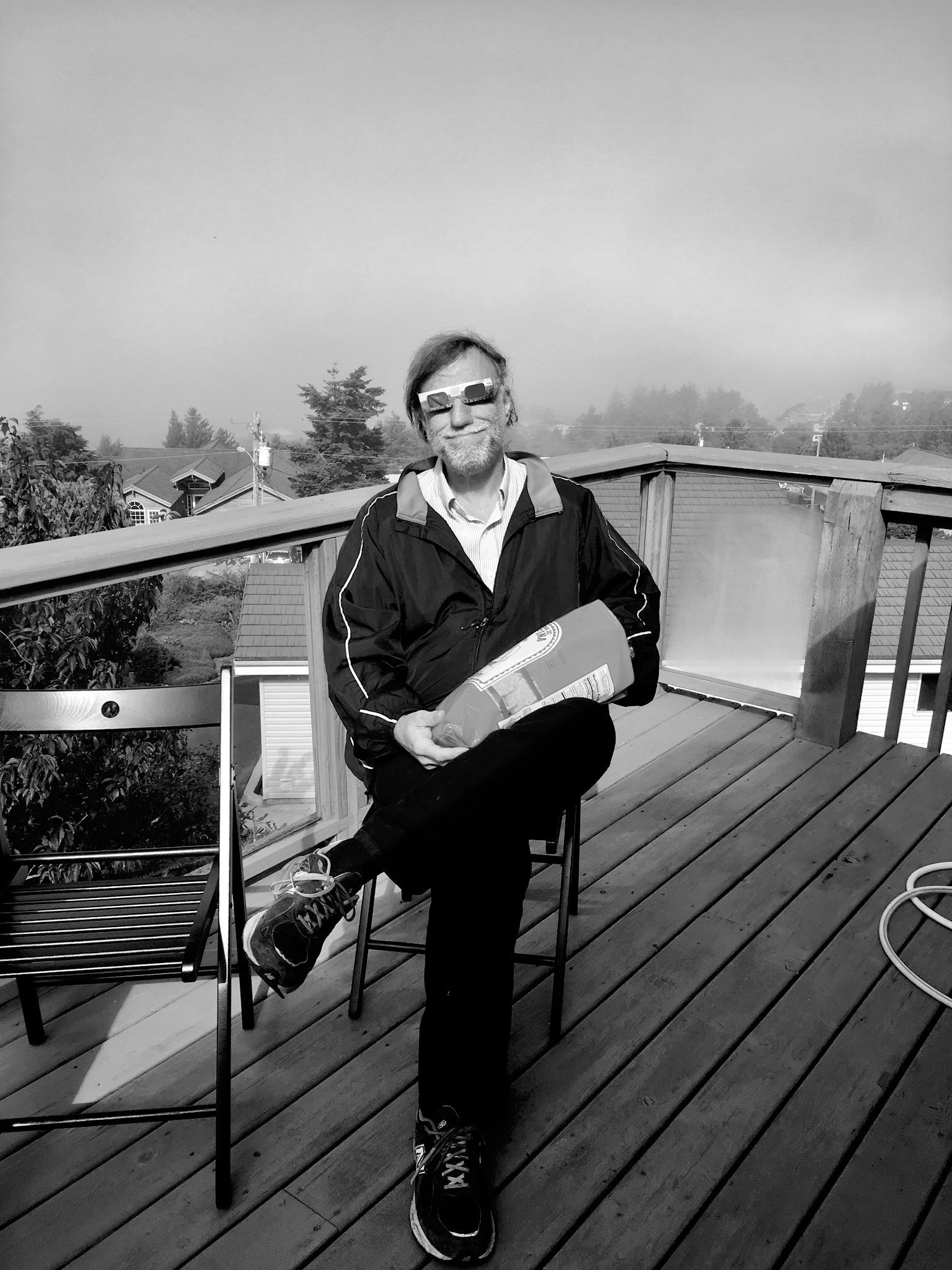
Photo with Text Message
K,
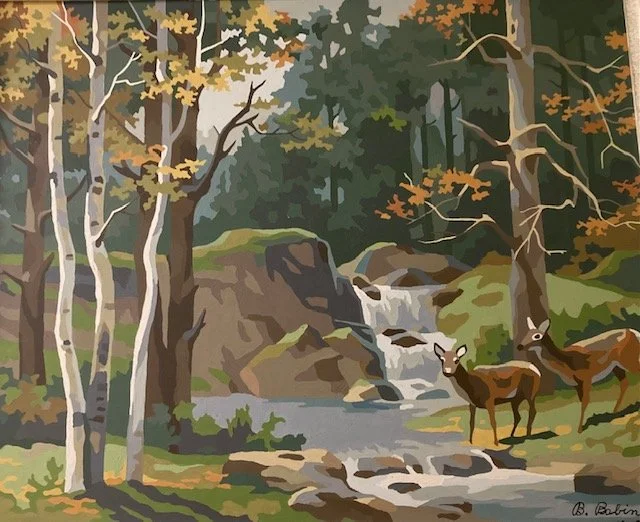
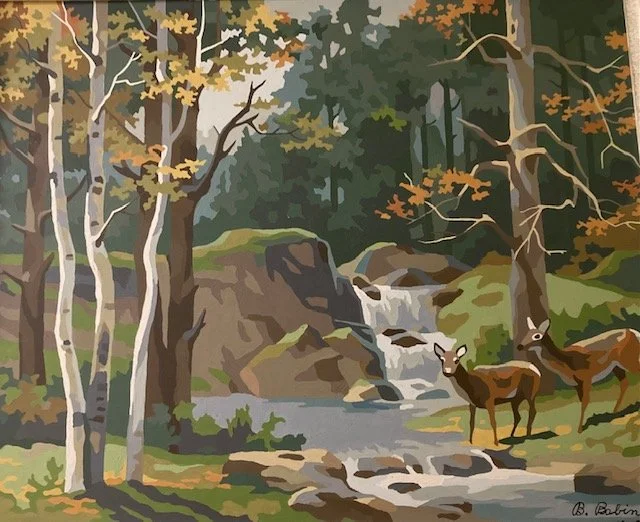
We saw this driving in town today, on the porch of an older restored house. The house has new owners, and they’ve hung some living room art on their front porch facing out to the street: see, a snow-covered house in a country landscape.
My first reaction was that they are genuine art lovers, and in love with their new home, and just need to be schooled in the finer skills of art appreciation. I turned to M and suggested we should offer our services as art appreciators to them. We could be their tutors, I said. Suggest track lighting.
Then I had another thought. Maybe it’s a new trend, placing inexpensive art on your home’s exterior.
I don’t know if you saw this where you live, though I bet you did when you lived in Spokane: the five point metal stars that became popular as outdoor art in rural areas about 25 years ago. You still see them sometimes.
There is a desperate impulse. There is an aching need for art.
H
Office Inventory
The diameter of a coin the width of its stand Was it four inches?
My friendship with Jay spanned four years
People ask me about Jay’s award because it’s small and human not large and formal like the certificates on the wall
There is an entry point I can tell the story about the coin, where it came from why it’s on this stand
There’s a literal human face
He made the stand by hand
Because he was very intelligent Jay could see the little things that made up the whole
The importance of each component without which the larger whole wouldn’t exist
On a trip to my hometown standing on the bank of the river there a half dollar coin in my hand I realized I had run out of time
What did Jay say sometimes? “Out of the indefinite, the definite”
“The Same Rules for the Ox as for the Lion Is Oppression “
We drove to the luau in a Plymouth sedan the size of an F250. The Plymouth was the sexy version of a Dodge.
I’m traveling with my mother and brothers. Mother and brother are both the “other.”
Father was recently dead. “ather” doesn’t mean anything.
The fronds on the palm trees were eye level from the second story balcony at the hotel.
There was tea in the hotel room. Tea is tree without the “r”.
Tea with an “r” is tear.
Mother’s niece had married an army captain stationed in Oahu.
My brothers and I had grown our hair long.
Mother’s niece explained about the Hulu dancers, that they may call you on stage to dance with them,
“but don’t worry.”
I worry the whole time and I’ve never stopped.
Decades go by.
________________________________________________________________________________________
Harold Bowes is the author of Detached Palace Garden (Ravenna Press, 2017). Harold’s poems have appeared in elimae, THRUSH Poetry Journal, alice blue, SOFTBLOW, Portland Review, DMQ Review, failbetter, and many others.
________________________________________________________________________________________
Issue #30.2 A Triple Issue: Jon Raimon, Bradley K Meyer, Andrey Gritsman
A Poem by Jon Raimon
-rising-
tidy eggs & faux too green grass. one more plastic basket in a world littered with drek. she meant well, my mom, each
Easter. which I capitalize here in her honor, in her dis- grace, as she died and as she
lived. glamorous drunk, it is a thing my mom was, esp- ecially on holidays where dazzle and
glitter, rebirth and miracles, diamonds and chunky neck- lasses rule the moment, our hopes:
it all passes on, with egg hunts gone wrong. kent cigarette butts and cute glass pint gin bottles dug
up in the yard be- side the pre-fab eggs filled with cheap chocolate and blood money.
and that last egg, unearthed be- hind the playhouse where your big brother shoots up, rebirths him-
self til he’s van- ished; wee you finds it, that egg, months later. it’s odd. a near dead blue,
drained by the spring rain, the summer’s rioting sunblast. when you open it, there it is,
tucked tight, fetus like,
right beneath a traumatized
slug in her dazzling golden ooze: Love.
just plain old love. who the hell knew?
________________________________________________________________________________________
Jon Raimon teaches writing in Ithaca, NY. His work explores grief, family, resistance, and all forms of love. He is part of Spring Writes, Ithaca’s literary festival, and his work appeared in Haikuniverse, Quasar Review, Adirondack Center for Writing, Wilderness, and will soon be featured in The Turning Leaf, Book of Matches, Merganser Magazine, and The Bluebird Word. His inspirations include the creek down the road, his children and students, and all kinds of rocks.
________________________________________________________________________________________
A Poem by Bradley K Meyer
The Seasons
‘What the fuck are perfect places?’ -Lorde
In Paris, out of the corner of my eye, I watch two teenagers make out on the train. I get out to drink alone on the Seine. I think about the violinist who was robbed here twice in one week. I can’t tell what’s in the river, but a bird dives for it. I order a sandwich from a food cart and do this in French. The seller shakes his head, ‘Don’t... don’t do that. Just speak English with me.’ I admit to feelings of persecution. Unhappiness is so obviously a stronger emotion than happiness. Some people say that some people feel that in this particular city. Louise says the world is complete without us. Litter amongst litter. Sad, intolerable fact. Lauren says of another Lauren, ‘I love her because she’s my friend, but she is not an artist. She took one photography class, maybe two and now she has gallery shows.’ I finish most of my sandwich. I am probably not the form of superfluous I choose for myself either. A yacht churns. A cloud and some buildings reflect in its glass. If the sky here is not aware of me, the insects are. I paint them sky blue with a brush. I have lowered the sky. Someone throws a bottle into the river. The current does not even have a bird to pull along on its string. Calling this ‘Being and Nothingness’ would be too on the nose. I throw some bread in the river. Someone will want it eventually.
________________________________________________________________________________________
Bradley K Meyer writes from Tbilisi, Georgia. Recent work has appeared in Biscuit Hill, BRUISER, Muleskinner and Right Hand Pointing. He teaches English.
________________________________________________________________________________________
A Poem by Andrey Gritsman
SILENCE
Silence is a grateful state of the soul. When you can hear grass growing, deep underground rivers flowing to the precipice, cats conversing about us, watching our irreconcilable deficiencies. Your voice from the past is calling me, explaining what happened and what could have happened. And I just welcome this silence with open arms, all ears, still yearning for this last word, hoping it's not the last.
________________________________________________________________________________________
Andrey Gritsman came to the US from Russia in 1981. He is a physician, poet and essayist, writes in two languages. He has been nominated for the Pushcart Prize several times and shortlisted for PSA Poetry Prize. Poems, essays, and short stories have appeared in more than ninety journals including New Orleans Review, Notre Dame Review, and Denver Quarterly, anthologized and translated into several European languages. He authored fifteen books of poetry and prose in both languages. He edits international poetry magazine Interpoezia (www.interpoezia.org) . Previous collections from Cervena Barva Press: Live Lanscape and Family Chronicles. New poetry collection Crossing the Line is forthcoming from Cervena Barva Press.
________________________________________________________________________________________
Issue #30.3 Three Poems by Bill Lavender
Photograph by Louis Maistros
from: city of god, poems based on a distracted* reading of a dubious translation** of De civitate Dei contra paganos, commonly known in English as The City of God by Saint Augustine of Hippo.
*by life and media in the USA, beginning January 6, 2021, the day of the Trump insurrection, ending January 6, 2025, the day of his election certification.
**Marcus Dods editor/translator, 1872 edition, Gutenberg Ebook #45304.
These poems are excerpted from the complete responses to the Augustine text, 400 some odd pieces, which will be released by MadHat Press in 2026.
20.17
our saint finds it “excessively barefaced” (inpudentiae nimiae) to read the apocalypse literally, like our own impudent oil execs buying up wind leases just so they can lie fallow while it rains fire, ‘climate talks’ in nice hotels yield barefaced good wishes, wheat crops cook in the ground & trump’s barefaced mugshot hits every front page, and the worst is yet to come
20.27
“such a judgment as has never before been,” a vision augustine shares with clarence thomas who lies awake at night itching to sink his pen into anything that smacks of ‘right to privacy’ (though just try to sneak a camera on one of those yachts) for it is just those privy moments we need to be punished for
20.28
& regardless of all the cruelly inequitable sentences handed down in the course of history by judges both human and divine showering honor glory wealth and offspring upon liars thieves and murderers and poverty prison and sorrow without bound upon the most saintly and selfless among us the “last” judgment shall be the perfect pairing of every mortal (living or not) with the just punishment and/or eternally blessed sensual massage everything so equitable there will be no need to ever judge anything again
________________________________________________________________________________________
Bill Lavender is a poet, novelist, musician, carpenter and publisher living in New Orleans. His twelfth book of poetry and magnum opus, city of god, appears from MadHat Press in 2026. My ID was published by BlazeVOX in October, 2019. His novel trilogy, Three Letters, (comprised of Q, Little A, and The Private I) was released in 2021 by Spuyten Duyvil. His verse memoir, Memory Wing, was published by Black Widow in 2011. Essays, fiction, poetry and other ephemera appear regularly in Xavier Review, Fell Swoop, Southern Review, Jacket2 and other print and online journals.
Bill is the founder of Lavender Ink/Diálogos and co-founder of the New Orleans Poetry Festival.
________________________________________________________________________________________
Issue #30.4 A Triple Issue: Vivian Faith Prescott, LC Gutierrez, Richard LeDue

A Poem by Vivian Faith Prescott
Escapement Goals for Flannel Shirt Girls
The number of adult salmon that return to the rivers to spawn is called “escapement.” They’ve escaped predators—fishermen, sealions and killer whales. How escapement is measured in us island girls, though, is by how many jobs we have, where we’re hiding money, like the bills I hid in my Chinese puzzle box. We’re not taught to escape predators or even what they look like. We only know wolves stalking deer, brown bear boars ripping apart cubs. Those young women whose parents own tug and barge companies, or are schoolteachers, escape better. Not so much the girls from the families of loggers or fishermen or sawmill workers. Do they live in public housing or the trailer court? What are their escapement goals? There’s no college on our island. They all have ferry tickets to nowhere. My brother joins the army and disappears for a couple decades. My older sister gets teen-married, I get teen-married, my younger sister gets teen-married. We escape to the cascading falls we cannot jump.
________________________________________________________________________________________
Vivian Faith Prescott was born and raised on a small island, Wrangell, Kaachxana.áak’w, in Southeast Alaska where she still lives and writes at her family’s fishcamp on the land of the Shtax’heen Kwáan. She is a member of the Pacific Sámi Searvi and a founding member of Community Roots, the first LGBTQIA+ group on the island. She mentors Alaskan writers in two writers’ groups: Blue Canoe Writers and the Drumlin Poets. She’s the author of several full-length poetry collections, a short story collection, and a foodoir.
________________________________________________________________________________________
A Poem by LC Gutierrez
Through the Smoke
i.
I packed myself to college, and when I emptied bags felt nothing
but the weight of it, like a cowbell trolling me back to blood- thinned doubt.
The pleat of plaid skirts weren’t for me, so I whacked off in a heavy-sweatered crouch.
Failure smells of rank incense and skunk weed. It lays awake
when you don’t want to be: unreadied and unreleased.
ii.
There is only space and nothing. I would fill it with the mud of thick-toed discontent.
The black light fuzz has taken me again like a cancer.
You say I’m a prince in rags, but when I dare look up the room is a hollow
the learned ones have picked through and walked away.
iii.
We don’t choose family, but this sinking version of myself was mine to take
and know they wouldn’t see me for the smoke or come a-rooting like wet-snouted truffle hogs
to find me where I’d flapped my wings to thud.
iv.
I took “The Matrix” for its philosophical crux and swallowed every sweaty pill that I was handed.
Head buried between the legs of strange bedfellows, and now I’m feeling hollow-puked inside out.
Shall I name this place of blind iteration, and know you’ll never see me here again?
________________________________________________________________________________________
LC Gutierrez is a product of many places in the South and the Caribbean. He currently lives, writes, teaches, and plays trombone in Madrid, Spain. His work has been published or forthcoming in a number of wonderful journals, such as: Notre Dame Review, Sugar House Review, Hobart, Tampa Review, Trampset and Trampoline Journal. He is a poetry reader for West Trade Review.
________________________________________________________________________________________
A Poem by Richard LeDue
“Reshelving the Dead”
I worked in the university library when I was a student. All the poetry books were together and the shelves there were as dusty as the old philosophy books that seemed to mock me for thinking about minoring in philosophy.
It was during this time I developed my allergy to dust, which seems an appropriate response to seeing all those great texts still as tombstones people pass by while looking for someone they know.
I wish I could say I discovered something interesting then, like how paper cuts were really dead writers haunting potential readers, but I mainly learned about minimum wage not being enough and how easy it is to whisper.
________________________________________________________________________________________
Richard LeDue (he/him) lives in Norway House, Manitoba, Canada. He writes poems. His last collection, “Another Another,” was released from Alien Buddha Press in May 2025.
________________________________________________________________________________________
Issue #30.5 A Triple Issue: Clint Margrave, J.R. Solonche, Jade Kleiner
A Poem by Clint Margrave
Keats’s Death Mask
My students complain that we focus too much on death in this class, that all the poets we study are obsessed with it,
so when I tell them I saw a copy of Keats’s death mask up for sale at Christie’s and joke, “Does anyone know if Christie’s takes credit cards?”
they don’t laugh and aren’t impressed, and just want to know what I’d do with it if I had the money.
I tell them I might pass it around at the next dinner party, or tie a string on it and wear it for Halloween or maybe just bring it to class and set it on this desk so we can all stare at it while discussing “Ode on a Grecian Urn,” 200 years after Keats died at their age.
________________________________________________________________________________________
Clint Margrave is the author of several books, including the poetry collections Salute the Wreckage, The Early Death of Men, and Visitor, all from NYQ Books. His work has appeared in The Threepenny Review, The Sun, Rattle, and Los Angeles Review of Books, among others.
________________________________________________________________________________________
A Poem by J.R. Solonche
My Life
When I was young, I was told many things. One thing I was told was not to stare at the sun.
If I did, I would go blind. I was not foolish.
I did not. Another thing was not to stare at the full moon through my bedroom window.
If I did, the moon would slice my life in half. I was foolish.
I did. And it did.
________________________________________________________________________________________
Nominated for the National Book Award, the Eric Hoffer Book Award, and nominated three times for the Pulitzer Prize, J.R. Solonche is the author of more than 40 books of poetry and coauthor of another. He lives in the Hudson Valley.
________________________________________________________________________________________
A Poem by Jade Kleiner
After Stealing Another Poet’s Notebook
I stole your notebook. I did not do this to rob you I did it to enrich myself I have meticulously scanned edited and submitted the upper most marketable 22% of the syllables you scribbled in Q-4, twenty twenty four.
I saw you writing in your notebook, I have no need for more, I am in good health and I have health insurance this year.
So I have your notebook.
________________________________________________________________________________________
Jade Kleiner is a writer and poet from New England. Her poetry can be found in manywor(l)ds, Neologism Poetry Journal, New Note Poetry, and elsewhere. Her fiction is upcoming in Bright Flash Literary Review. She is transgender and has practiced in the Plum Village tradition since 2020.
________________________________________________________________________________________
Issue #30.6 A Triple Issue: Jim Daniels, Jason Davidson, Bebe Cullen

A Poem by Jim Daniels
Sleeping on the Floor of my Office After a Fight
was like giving my own self a timeout to pout in the corner while she slept drunk and comfy
in the bed back home. I wanted to call her on the office phone. to remind her I’d run away
and was going to stay in my office until she apologized. It makes me laugh even now
forty years later, finding the xeroxes of my face I made that night
squeaking WANTED in permanent marker across the top of the page.
We broke up over the phone. Her office just down the hall from mine. But she never slept there.
Breaking up was like making a xerox of your face. Blinding light searing eyeballs, hair
flattened into insanity. Permanent marker invisible forever.
________________________________________________________________________________________
Jim Daniels’ Late Invocation for Magic: New and Selected Poems is forthcoming from Michigan State University Press. His first book of nonfiction, Ignorance of Trees, was published in 2025, and his latest fiction book, The Luck of the Fall, was published in 2023. A native of Detroit, he currently lives in Pittsburgh and teaches in the Alma College low-residency MFA program.
________________________________________________________________________________________
A Poem by Jason Davidson
A Chest, A Home
the seawall, the sand-castles, the slaughter-house. my crushed courage, your belated brave. on the death-line, an old woman with ink beneath her fingertips coos brightly. sweat drains from her slip-knot like the sea remembers, but she takes each of their tongues to task. the sea always remembers. do you remember the sea, little comma? wildfire broke out upon the open water and we cherished our claustrophobia. we were no one. we were good bones. we broke open only momentarily and kept our pockets filled with stones. lonesome stones. stones painted with their faces. hello, little brother. hello, little sister. that terrible spring, you emptied your pockets and floated into the air. a rendering. a shift-change. old mother dark-star caught you staring and carried you away, into the night. come home, little comma. my chest opens like a puzzle, surrounded by your moat. come home.
________________________________________________________________________________________
Jason Davidson is a poet, fiction writer and theatre-maker. He's written, directed and produced over two hundred works of experiential theatre. His poetry has appeared in journals such as Unbroken, Cathexis North, Quibble and is forthcoming in Rawhead and others. When he isn't traveling, he lives on California's Central Coast with his husband and small brood of four-legged children. He's slowly finishing his first novel and a new full-length collection of poetry.
________________________________________________________________________________________
A Poem by Bebe Cullen
I Let It Enfold Me
Said I loved fashion, said This is where I find the combs and This is where I find the cigarette packs. This is my favorite boy because he always picks up his newspaper At the same time every day. 2:54, right off the bus. Cried lots of times a day At trumpets and thunder and strawberries And how you’d lean over the chair and How they were eating. They ate so fast. I took a lot of showers And let the water boil and pour Over my shoulders and down my spine And it hit my achilles heel and felt like a blanket or blood.
Summer came with tractors and Feet dirty from unswept floors. My thighs touched. My skin cleared. My hair grew and Knotted and Waved. It’s been a month since I said You were beautiful And funny And so so smart And you said I’m sorry And I didn’t stay To hear why.
I let ants bite me because That’s how you make friends. Let sweat build up on the Back of my neck, Wouldn’t wipe it off. Let my leg hair grow, Let my mailbox fill up, Let my window stay open, All week long. “Silver Springs” Over and over Except I didn’t run for you.
________________________________________________________________________________________
Bebe Cullen is a high school sophomore from Falmouth, Maine. Although she runs her school’s online magazine, this is her first real publication, and she is so, so excited. She’s her community’s cult classic and is often called a “piece of work.” She’s ready to see where she can go next. Her favorite word is precocious, just so you know.
________________________________________________________________________________________
Issue #30.7 A Triple Issue: Steve Lambert, Chenyue Wang, John Grey
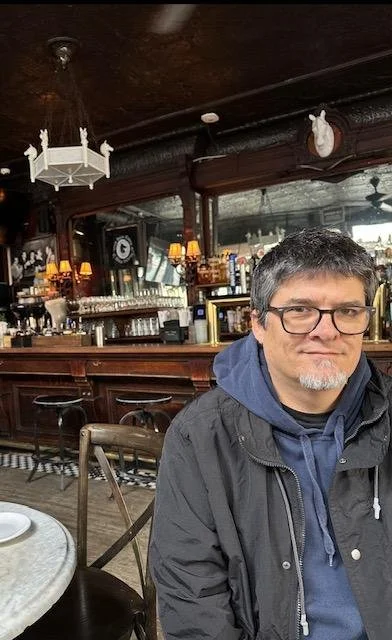
A Poem by Steve Lambert
Souvenir
Edinburgh, West End
Up at 2:30 after a piss, I grab my phone and go out to the living room couch, check email, Scroll X, BlueSky, Facebook. Nothing. I Walk the unfamiliar living room, look closer at things, trying not to wake Keri, every move I make Tai-chi. Everyone we know is far away and sleeping. I can’t read. Twilight comes early here. Wide awake and far from home, windows open and chilly June whisping in the burnt smell of billions of roasting coffee beans. Chilly in June. I go and part the drapes, see a small, pale figure across the street, in the gray morning, like a child playing hide and seek, squatting against the back wall of The Caledonian Hotel. Not a ghost or girl, actually, but a young woman, early twenties, having a wee, a black ribbon of a man swaying guard next to her in the gloaming. They don’t see me—or pretend not to—and I watch until they swerve out of view. Don’t ask too much of what you see, I think. Sometimes, ask nothing.
________________________________________________________________________________________
Steve Lambert was born in Louisiana but grew up in Florida. His writing has appeared, or is forthcoming, in Saw Palm, Trampoline Poetry, Chiron Review, The Pinch, Northampton Poetry Review (UK), Broad River Review, Longleaf Review, Emrys Journal, Bull Fiction, Into the Void, Cowboy Jamboree, Cortland Review, and many other places. In 2015 he won third place in Glimmer Train’s Very Short Fiction contest and in 2018 he won Emrys Journal’s Nancy Dew Taylor Poetry Prize. He is the recipient of four Pushcart Prize nominations and was a Rash Award in Fiction finalist. He is the author of the poetry collections Heat Seekers (CW Books, 2017) and The Shamble (CW Books, 2020), the book-length poem Dutch Ears (2025), and the fiction collection The Patron Saint of Birds (Cowboy Jamboree, 2020). He holds an MFA in Poetry from the University of Texas at El Paso and teaches at the University of North Florida.
________________________________________________________________________________________
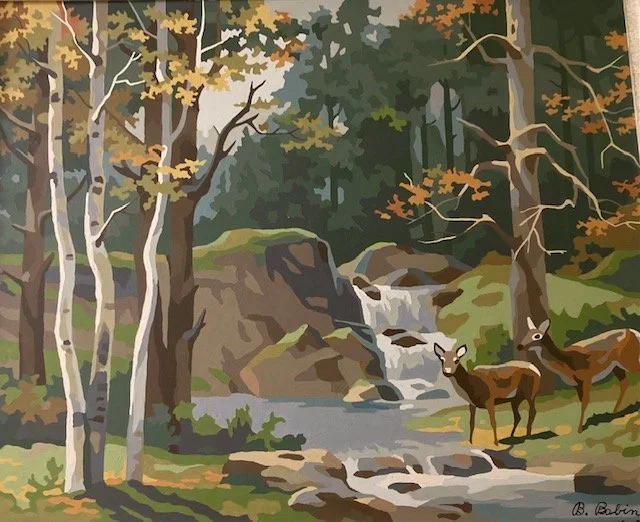
A Poem by Chenyue Wang
Swallow
I walk between dorm & library, piled leaves crunching to pulp. It’s the only sound small enough
to accompany me through a New England winter. Years ago, in the warm breath of December, white smoke rose in my home, steaming
the kitchen windows over the pot. Somewhere, my father still presses his squat palm into this memory like dough itself–
kneading on our pastry board, before he passes it to me. My fingers are clumsy, but human enough to remember, even
through waves of time, through oceans crossed, how to keep the dough warm as breath. As bubbles churning in the pot, threatening
to overflow—Mandarin words I can’t quite recall simmer across the window’s humid blur, moisture
covering the strokes along the sill. Once ready, I always watched the dumplings cooling down, their skin shrinking, vanishing into
translucence. Pink pork & shrimp, black wood ear, green Napa cabbage always daring to spill out. (They never did.)
But today, in this cold gray space, leaves translate to ground before I’m even awake. I chew
a crumbly ham sandwich to its edges. Soggy and homesick I swallow. I swallow again, even black tea
too bitter to wash it down.
________________________________________________________________________________________
Chenyue Wang is a writer from Beijing, China. She is currently a high school student in Connecticut. In addition to poetry, she enjoys writing short stories in her free time. Her work often explores memory and cross-cultural identity.
________________________________________________________________________________________
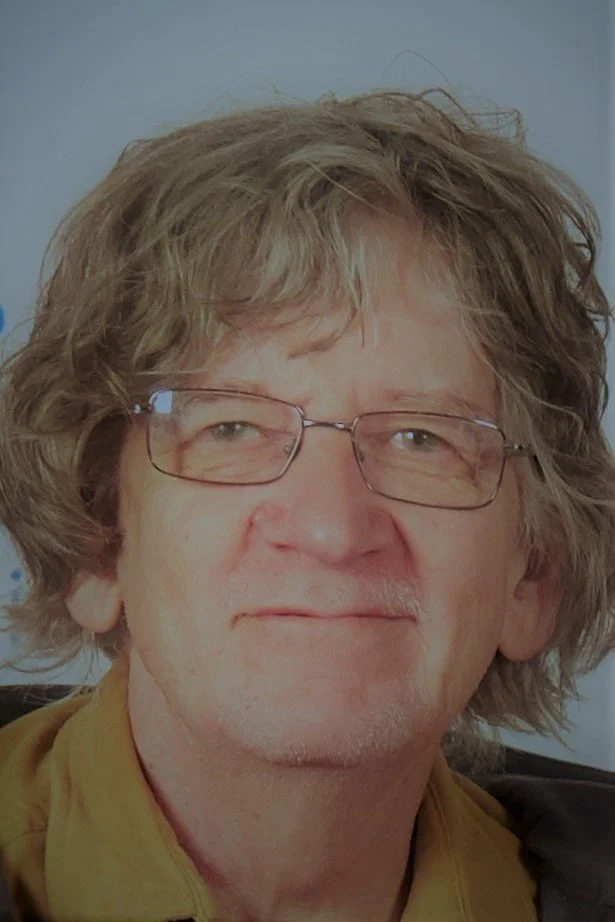
A Poem by John Grey
The Season of Ghost Horses
Lonely, the evergreens stand sentinel, Berries ripen, dreams too – though neither are much good once the sun’s gone feral.
Hell’s coastline stretches on, a jagged hymn of rock and salt, purple sea streaked like bruises on the body of the world. Islands jut up, fists raised, angry at nothing in particular.
We descended – not so much fell as tore through a thin skin between thought and indulgence. Sex was a currency, spent in the underworld of mind where memory forgets to keep records.
Through the fogged-up windscreen, they’re horses, gray, shrunken, ghosts of something once wild. He had a rubbery face, flushed with the kind of generosity that forgets to ask questions. Not as rare as he reckoned, but seldom alone long enough to know how lonely he was.
My thoughts - those old, unsaid things from years before - came back like birds without their songs, roosting in the nests of memory. One stroke, and the years between were gone.
His poems were vivid, so much so he mistook them for the world itself. The devil, of course, never left - just changed zip codes.
Dreams, forgotten by morning, return like stray dogs sniffing at the back door. The artwork reminded me of those shapes that dance on the retina before sleep takes hold.
I face the world face down – not in defeat, just in defiance. Some things are too good to miss, yet too fast to catch. And I’ve stopped chasing.
________________________________________________________________________________________
John Grey is an Australian poet, US resident, recently published in New World Writing, River And South and The Alembic. Latest books, “Bittersweet”, “Subject Matters” and “Between Two Fires” are available through Amazon. Work upcoming in Rush, White Wall Review and Flights.
________________________________________________________________________________________
Issue #30.8 A Triple Issue: Mark Folse, Ewen Glass, Ed Ruzicka

A Poem by Mark Folse
Memory Palace
…that which we are, we are…
— Tennyson, “Ulysses”
Is it too late to start a memory palace when frequently I misremember where I've put myself, lose an hour in a bookshelf as appointments slyly slip into the past?
Clouds assemble on the horizon and I forget the names of vague constellations; the faces in Polaroids’ faded colors. The prophecies of doctors frighten me.
I am my only hero without an Athena to guide or guard, afraid of the shades that crowd where life fades. How to navigate in this starless sea?
Forget Odysseus. Follow the cloud- drunk monks down a meandering path each moment a poem. The moon on a dark pond delights in its reflection.
________________________________________________________________________________________
Mark Folse is a poet, retired journalist and blogger and IT factotum and native of New Orleans. His poems have appeared in the Peauxdunque Review, New Laurel Review, Ellipsis, The Dead Mule School of Southern Literature, The New Delta Review, Metazen, Ellipsis, Unlikely Stories and The Maple Leaf Rag. He was a member of the post-Katrina/Federal Flood NOLA Bloggers writing and activist group, and his work from that period was anthologized in What We Know: New Orleans as Home, Please Forward, The Louisiana Anthology and A Howling in the Wires.
________________________________________________________________________________________
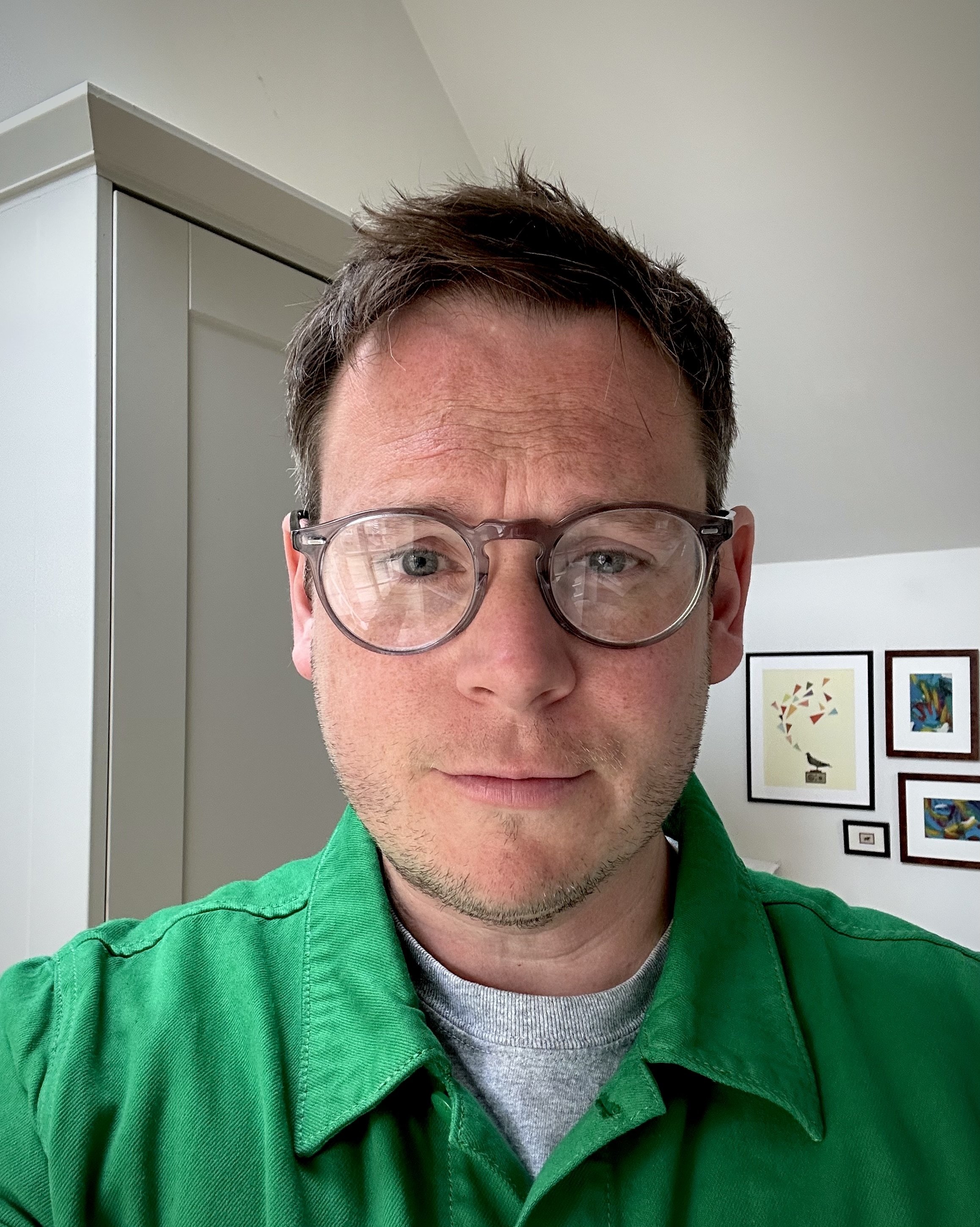
A Poem by Ewen Glass
Fixing the Coffee Machine
My grandad died when I was two; he lived in his workshop and could fix just about anything. My dad just tinkers and disassembles. They might unscrew and prise, evaluate, re-solder if need be, my dad and his dad, my dad and me, but this coffee machine can’t be fixed, not by me anyway. I care little for what didn’t pass into my fingers, I care little for them, but I’m a thinker, I dissemble. Maybe back then things were fixable.
________________________________________________________________________________________
Ewen Glass is a screenwriter and poet from Northern Ireland who lives with two dogs, a tortoise and a body of self-doubt; his poetry has appeared in the likes of Okay Donkey, Maudlin House, HAD, Poetry Scotland and One Art. Bluesky/X/IG: @ewenglass
________________________________________________________________________________________
A Poem by Ed Ruzicka
Billy the Kid
Circa 1877 William H. Bonney started out as a roughshod cattle wrangler with an outfit called the Regulators in the unrecognized territory of New Mexico where Colt 44s did most of the convincing.
There were whole handfuls of drunk bastards with notches scratched into their handles. Billy was just more active, rattler quick. Before he was eighteen, Billy had a legend that kept him hiding out from lawmen.
Thugs like that, who make their name slug by slug and don’t care nothing about tombstones are worthless as a pinch of salt in a wound.
So, there was plenty of news made, but no tears shed, when Silver City’s best friend, Sheriff Pat Garrett, slid in behind Billy quiet as moonlight.
Garrett got the drop on the Kid. Made Billy’s boots point which-ways. Billy’s dusty hat fell into dust and that infamous Remington revolver Billy wielded so effectively started a long, serpentine journey to a glass case in a Fort Sumner, N.M. museum.
________________________________________________________________________________________
Ed Ruzicka has published four full-length books of poetry, most recently In the Wind by Sligo Creek Publishing. Ed’s poems have appeared in the Atlanta Review, the Chicago Literary Review, Rattle, Canary and many others. His poems have been nominated for the Pushcart Prize. Ed is also president of the Poetry Society of Louisiana. Ed lives quietly under the green of live oak trees in Baton Rouge with his wife, Renee.
________________________________________________________________________________________
Issue #30.9 Four Poems by Emily Kingery
Bend
“The body doesn’t go with her, the dress doesn’t go with her, but she has value in her head.” – doll appraisal, Antiques Roadshow
She has value in her: pupiled, open, shut and soft as paper money. Traded-for. Like secrets in the
pockets of an unwashed pair of jeans with balled receipts from Chinese restaurants he likes like
her. Her head is pendulumed. It bears a spring. When he unsleeves his records for her, drops
the needle, he has need of it: the weight behind her eyes that lashes lashes, black on porcelain. Back on
his horse he goes; he carousels. He tells her of his Kerouac truth, his shotgun dream, his brute
proclivities: thrift-store tees, loosies, life-of-the- mind and her lashes swoop like lashes of eyes
on video. He pauses for her his image of her in his reel of her with him in his head and says
Why aren’t you fun anymore? Anymore she is an Oregon town of Yellow Pages and dial-up
where the last Blockbuster store hangs on like spider silk. I miss us, he says, as if the close
were not a manufacture, not a head of tiny levers whose inventor said, What if we made her sleep?
And numbered her nape. And then positioned her head bending so she could almost dream.
Begonias
I am unable to understand the forms of my vanity – Frank O’Hara, “To the Harbormaster”
My begonias are the color of your children’s fingertips and dying in the no-good air. There is none I’ve spared
the perfume of your name. I’ve fissured it in my mouth to molecules. You must now think of detonating them,
frantic as notes. Fermataed, luminous eighth-note bulbs strung over my tongue like an ivied beam of a pergola
under a blood moon. You must erase from me the ivy, whir the screws from the wood, imagine quick whose
playground sand my voice now travels to, what chains. I am sorry for chains. What I mean is to ask you, please,
whose turn will it be in the morning to carry the clouds from the faucet, to tremble them down the hall and to
the windowsill? It won’t be your children. Those names I’ve worn, plinked out, the last of your music box. I am
no good with endings. And that opening line– how ugly to ruin what’s tender. They are nothing like anything,
the begonias. They are singular. They beg for my mercy killing, and instead I exhale, like prayers or toxins, your
consonants, your vowels, these vessels still ruddered parallel to mine and splitting behind us the waves.
You, Though You Are Evil
In the clean light of Quicken, It’s just, they say, there is no market
for bread qua bread. No market for casting from a Wonder bag
into a pond of ducks, they say, the market is for pebbles. Small
as in corporate fish tanks, or beneath the boys who once
spun merry-go-rounds so hard the wind made blindfolds of our hair.
Our children are hungry, they say, and the holy data on bread
show crumbs. Let us shake out the toaster, I say, but fiscal
fiscal fiscal ripples the pond like food. We love weight
in our palms, they say, and I think of boys who took my wrists
to prove pebbles thrown into light could fool bats. Return to us
in the black, they say, of stones, the kind to close off tombs.
The women came first in that story, then the Lord, saying, Why are you crying?
Here, too, There is nothing, they say. Nothing here for you to see.
The Way of Things
Sometimes you’re the blank, sometimes you’re the blank we say, gone blank, filling blanks with what passes
for wisdom. Is the truth in the sometimes, the weakening slingshot of ours lobbing blanks at the foreheads of gods
who could press their thumbs to our throats any time? Did we claw through centuries of language for this:
firing blanks at our temples, eating crayon-bright butters, stuffing flowers in Styrofoam blocks and sometimes and
blanks are the best we can do? What if we’re kill-tagged? Or estate-sale tagged? Or we’re tagged and we’re it and
we run, but come on, we can never outrun what’s behind or inside us? What if we’re ships, surrounded by absence
of ships, and we think it’s the eye, we think we can wait but we have the wrong eye, it’s the eye of a needle, and the eye
of a god is both eye and eye, and we wail to him: I, and I, and I? What of sometimes, then? What of blanks we mouth
like candy in church, in love with the slop of our tongues when the way of an eye is through or is no way at all?
________________________________________________________________________________________
Emily Kingery is the author of Invasives (Finishing Line Press, 2023). Her work appears widely in journals and has been selected for multiple honors and awards. She teaches creative writing and literature at St. Ambrose University and is an emeritus member of the Board of Directors at the Midwest Writing Center, a non-profit supporting writers in the Quad Cities community (mwcqc.org). You can find her at emilykingery.com.
________________________________________________________________________________________
Issue #30.10 A Triple Issue: Leslie Cairns, Julie Elise Landry, Margie Duncan
A Poem by Leslie Cairns
Wisteria
Sometimes, when I haven’t been touched For months, I pretend/dissisociate/meditate/picturesque/decompress
The image of you touching me, finding your vowels In my name. Thrusting your tongue near my shoulderblade-
I picture lingering kisses when we first met, The swell of the belly near the sunset, upside down, as we laid in fields unplowed–
& pretended the world couldn’t see us yet. I picture times my face was cradled. The way my baby and I just stare at each other, in the hospital
Cradle to cradle. My belly healing, his just Figuring out movement, beginnings–
& all that matters is this. & the way my childhood bedroom had pine trees that swayed Even on my hardest days.
________________________________________________________________________________________
Leslie Cairns is a writer from Denver, CO. She has written in Querencia Press, Honeyguide Magazine, and others. She is a former Pushcart Press Nominee ('23, '24).
________________________________________________________________________________________
A Poem by Julie Elise Landry
Indistinguishable
For Maudie
We met someone somewhere in a pile of pizza boxes, one of the boys or the men or what have you, but I only remember us standing in a living room arena, their dull toy guitars scoring badly while we watched, shouting grandeur,
and back then even professors collapsed us—our names always paired among chalkboards and chairs with shieldmaiden arms, our big voices slipping and vaulting like spilled solo cups in tenement rugs behind the football field, accused together
of corroding collegiate prestige with sulfurous vulgarity and volume, of cracking teacup reputations— so inseparable, presented as dyad to any assembled. The most neurotic vandals this side of how-dare-they!
And after, days after, you poured me a three-times distilled grain of parley: how our friend said his friend said some thing about “the girl” from the party “with the lazy eye”—but nobody knew which one of us he meant! And how bizarre, and they laughed, you laughed, I laughed.
Until I reflected. And I noticed. An asymmetrical surprise: my disparate pair of eyes. Invisible for 20 years until some guy I cannot even remember told a radio intern to tell you to tell me to see mismatched circles and diamonds in every blue-eyed, crook-eyed smile.
I wish I knew which eye to love, but I am loathe to ask.
________________________________________________________________________________________
Julie Elise Landry is a New Orleans poet whose work has appeared in A-minor Magazine, Midway Journal, Vassar Review, and more. She holds an MA in English from the University of Louisiana at Monroe, and she is pursuing an MFA in poetry from the University of New Orleans. In 2025, she was named a poetry finalist for the LMNL Arts Patty Friedmann Writing Contest. She serves as an Associate Poetry Editor for Bayou Magazine and as the emcee for Silver Room, UNO’s virtual reading series.
________________________________________________________________________________________
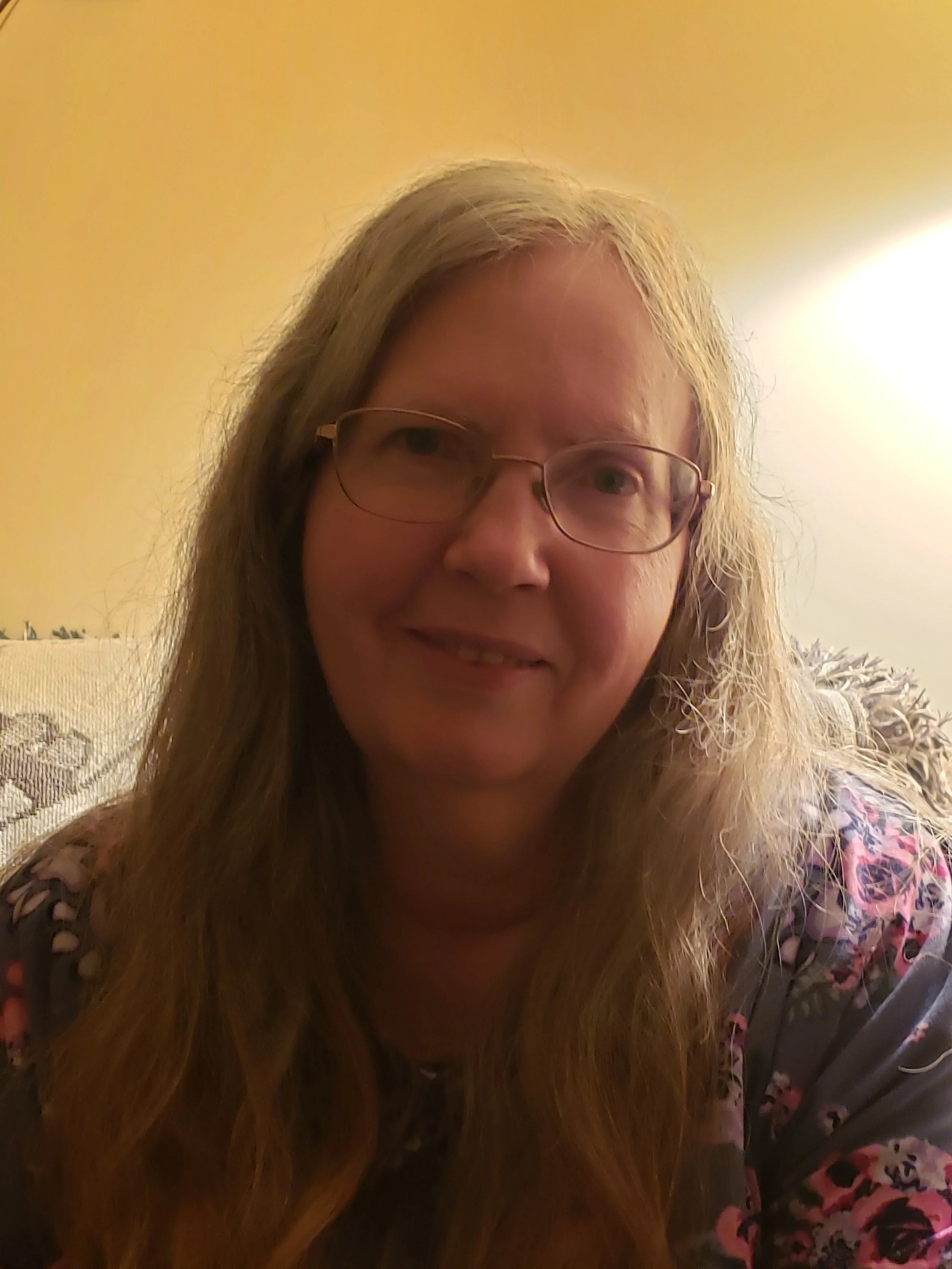
A Poem by Margie Duncan
The Cyborg Learns Something About Friendship
The handlebars crackle under my hands. I am careful not to crush them. The bike and I are riding across the surface of Earth, to the house of my friend.
She sat in front of me in school. I watched the back of her hair. Whenever she turned to hand me papers, I could detect cereal on her breath.
The air is hot at this latitude in summer. This Sun’s surface is usually 5600 degrees Celsius. The rays meet me at a steep angle. Earth’s tilt is a problem for science but not for me.
I got my name from a cardboard box. It included cereal, a piece of plastic -- listed on the box as my prize -- and dust from the fur of a mammal.
I don’t eat cereal. Earth travels in an ellipse around its Sun, which is moving farther away. I feel this but no need to mention it. I am
getting closer to her house, and I do not sweat. I learned her name on the first day. I saw her test answers no matter how small she wrote.
The bike and I stick to posted limits of speed to avoid trouble. Trouble is different from problems. We stay off the grass. When we stop
at a traffic light, I keep my feet on the pedals and balance my weight on the seat. The skin of these arms turns pink under the Sun. The bike does not change color.
Why are you here? She talks through the screen. A bathing suit is waiting in the bike’s saddlebag. The friend has a pool. I didn’t invite you.
I detect cereal on breath. The closed door is the invitation to leave. The Sun is a burning ball of gasses
147.42 kilometers from Earth. Tomorrow it is the bike’s turn to decide where to ride.
________________________________________________________________________________________
Margie Duncan lives and hikes in NJ with her husband, Brian, and the ghosts of two dogs, while their two tuxedo cats mostly sleep at home. When she retired from the business side of academia, she returned to writing poetry and sometimes remembers to look out the window. Her poems have appeared in Thimble, OneArt, Rust & Moth, Lily Poetry Review, Gyroscope Review, Third Wednesday, Halfway Down the Stairs, and other places
________________________________________________________________________________________
Issue #30.11 Three Poems by Meghan Sullivan

Babysitting at the Eleanor
When I ask if he’s ever been to the aquarium, Jake checks for understanding, like mommy’s belly?
2, 4, and 6, boys, so they make pizza crusts, penises, even the artificial Pothos leaves into swords and guns.
Luna Lovegood, Hedwig, the only character I recognize from their movie is Harry, which the boys all find funny.
Even 2 merps out Hawwy with a chortle. We watch before bedtime where I lazily read a book about sharks.
I skip as many pages as I can get away with (Jake, 4, notices the cheat—gestures back to the page about babies
in the momma shark’s “mermaid purse”). The boys wiggle their noses, fold their ears hot-dog-style
as we read that sharks’ skeletons are made of cartilage. Will I be such a slovenly librarian with my own
eggs? Running to the television and nightgown the moment those tendrils kiss the seabed. 6 is tired,
eyes rolling back after bragging about his adult teeth to which 4 replies grr! and shows his blue tongue.
Despite their mother’s warning of sensitive sleep, fear of the house-elf, Dobby, the boys melt into themselves.
When his breath steadies, I pad 2 with body pillows, a “taco” to keep him from falling out of their big, shared bed.
Digesting nicotine is one way to cope with the major unknowns—
I don’t understand the economy, for example, and the car? Totaled when the voice on apple play utters words like “deductible” or “limit” “number.” Allegedly, washer fluid is easy enough to fill
alone. The whole evening was eaten by googling Eileen Myles’ younger girlfriend. This is where God has decided the heat will be tonight. Leopidine, how is your inner world? Does your “person”
have insurance? When Danny venmos me for a muffin, I’m insulted! Our friend economy: dried hibiscus leaves, my wearing her Lisa Simpson ballcap a whole season, text chains where we jerk eachother’s
neuroses—“Do you think these grasshoppers fucking are a sign?” She assures me that variable ex is not likely to repatriate. We decide that as long as one of us knows how to propogate Mexican oregano,
we’ll be okay. The jurys still out on “the one” but I hope to share that conjugal peck with someone salt of the earth—someone who snaps pictures of the Bowser-looking spider.
Peach Peony
When you left, a vacuum opened in the kitchen. A pit of nutritional despair, Peach Peony tea leaves sweating over the teacup. I dreamed you called without reason: “How’s your inner world today?” The cart before the horse, always. To cats with human names like Kenneth, Earl, or Barbara, I smell your protections. Without tender, we are itchy in a wild brush & I am at the bank, rummaging lollipop bins for a “black hole” sucker. A tangible to the massive you in me collapsing. While I reject the myth of the solitary artist, who wants to spend the rest of their natural life stretching? The cat jumped this morning. In that cartoonish October fashion. His whole organ system pulling itself into a crescent moon. To the kittens who come and go from their person, ask them: the only way out? Through?
________________________________________________________________________________________
Meghan Sullivan is a poet, teacher, Long Islander, and lover. She has her MFA in Poetry from the Creative Writing Workshop at the University of New Orleans and teaches Rhetoric at Louisiana State University. Her poems and interviews have been published in several print and online publications, including The Gay and Lesbian Review, Bear Review, and Tilted House. You can find her on instagram @sunnysullypoetry.
________________________________________________________________________________________
Issue #30.12 A Triple Issue: Hibah Shabkhez, Emma Johnson-Rivard, Ron Riekki

A Poem by Hibah Shabkhez
Kites Look Better At A Distance
Bow-tailed, fluttering their bright colours against the blue of the sky as the flowers do upon the green of the earth, kites look glorious in the spring. Like ice shining out of sugarcane juice in summer, like the flicker of a fire from a window in winter, they make the heart leap and sing. Up close, they turn into frail, gaudy strips of paper glued to hunchbacked sticks. Rats and I hate each other: there is an instant, lasting revulsion. Cats and I start out as friends, until the realisation hits: this fluffy, gambolling thing is a vicious predator. Thus it is also with the kites of autumn, brown-winged and eerie, gliding upon the wind in their svelte formations: when they settle on the tree, two feet from my face, there is only the stench of death and the cold, cruel eyes boring into mine.
________________________________________________________________________________________
Hibah Shabkhez is a writer and photographer from Lahore, Pakistan. Her work has previously appeared in Arc Poetry, Meniscus, Thimble, Harpur Palate, Frogmore Papers, Potomac Review, and a number of other literary magazines. Studying life, languages, and literature from a comparative perspective across linguistic and cultural boundaries holds a particular fascination for her.
Linktree: https://linktr.ee/HibahShabkhez
________________________________________________________________________________________
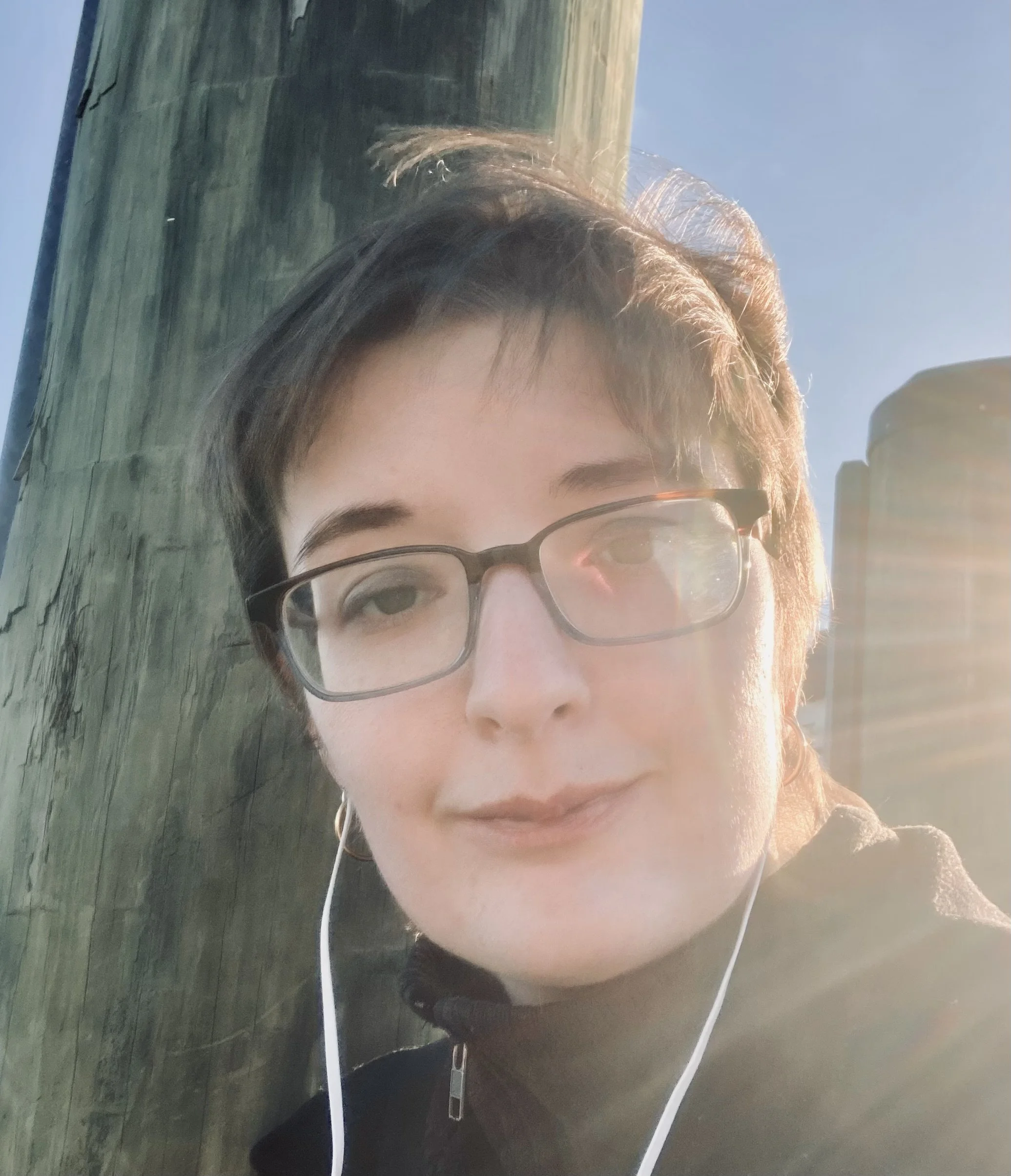
Two Poems by Emma Johnson-Rivard
hemophilia
my condition demands bruises too easily, the darkened shine ugly on the skin, a knot touching bone. i’m told you learn to live with these things (or not), banked on such seminal truths as fuck around and find out;
this being less about karma and more on the way gravity tilts the soul through the earth. rats only commit cannibalism when forced into starvation conditions and hemophiliacs have a tendency to die in car crashes. nonetheless, i still travel. i have seen some small slice of the globe and all its gravity.
today, we are marching to town hall and some girl got her head bashed in by a cop and i am bruised from nothing important, not yet dead from a car crash or the gravity of genetics, laying words on a line like a bruise, each one chosen with such care.
The Cat Eats a Roach
The cat took the legs apart, crushed a soul between her paws. Tooth and press to pressure, bearing down. These are the animal ways, the metaphor stuck imperfect.
We swim in the sun, killing roaches. Saying, it cannot be helped. We had to.
Yet, it was alive. It was there.
________________________________________________________________________________________
Emma Johnson-Rivard is a doctoral student in creative writing at the University of Cincinnati. Her work has appeared in Strange Horizons, Coffin Bell, Red Flag Poetry, and others. She can be found at Bluesky at @blackcattales and at emmajohnson-rivard.com.
________________________________________________________________________________________
A Poem by Ron Riekki
The Title of This Poem
is hidden. Our relationship, a tension pneumothorax. Last week,
there was a moment, in the car, with the downed telephone line,
where we debated whether or not to drive across it. We didn’t. We
had to go around the other side of the world to get home. You
told me it’s better to be alive. I debated you.
A few years ago—
another relationship—I decided to drive through the flood, not
realizing that cars can float. It was only for a little bit, making
it through, but the water destroyed the front bumper, but we made it.
I remember driving on the other side, the car bleeding, its guts
dripping, our hyperventilation thoughts, and feeling we were
postmodern queens, like suns were in our chests, and the cost
just about killed me. I tell you I wish I was nameless.
________________________________________________________________________________________
Ron Riekki has been awarded a 2015 The Best Small Fictions, 2016 Shenandoah Fiction Prize, 2016 IPPY Award, 2019 Red Rock Film Fest Award, 2019 Best of the Net finalist, 2019 Très Court International Film Festival Audience Award and Grand Prix, 2020 Dracula Film Festival Vladutz Trophy, 2020 Rhysling Anthology inclusion, and 2022 Pushcart Prize. Right now, Riekki's listening to "Spoon on Austin City Limits 'Inside Out.'"
________________________________________________________________________________________